


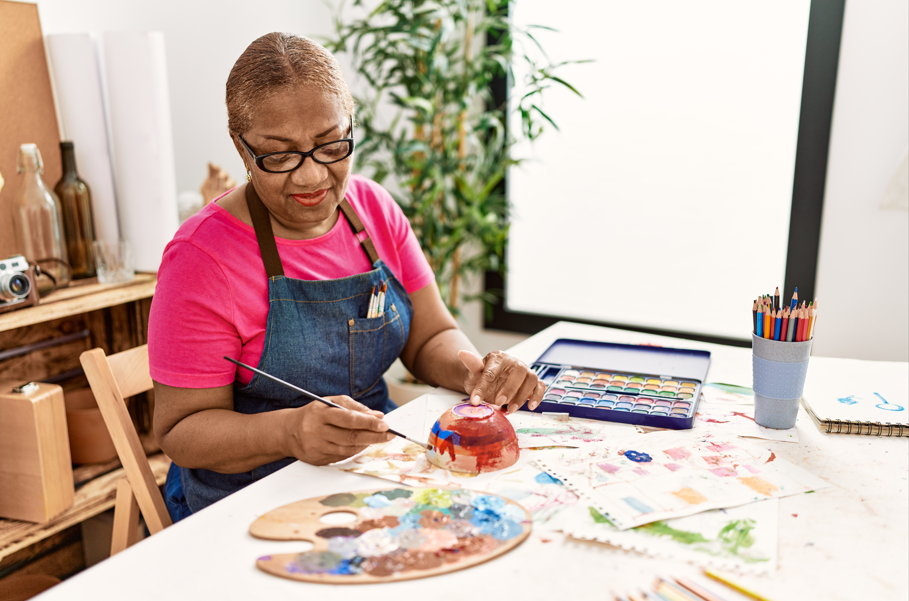
There is something deeply satisfying about finishing a piece you made entirely with your own hands, something no one else in the world has created quite like that. But getting there takes more than following a tutorial step by step. True creative authenticity grows from the choices you make, the materials you reach for, and the willingness to trust your instincts even when the result surprises you.
Whether you are just starting out or you have been crafting for years, developing a style that feels unmistakably yours is a journey worth taking.
Start With What Actually Moves You
Authentic crafts begin with genuine curiosity. Before picking up a brush, needle, or tool, pause and ask yourself what truly draws you in. Is it bold color? Rich texture? The quiet satisfaction of precision work? The beauty found in raw imperfection? Your honest answers will shape everything, from the medium you choose to the small finishing details you instinctively reach for.
Pay attention to what you return to again and again. The colors in your wardrobe, the textures you linger over in a fabric store, the images you keep saving on your phone, these are quiet signals about your aesthetic. Let them guide your creative decisions instead of defaulting to whatever trend is currently everywhere.
Let Imperfection Work for You
One of the biggest obstacles to creative authenticity is the pressure to produce something flawless. But perfection is often the enemy of personality. The slight unevenness of a hand-stitched hem, the organic drip of paint that landed somewhere unexpected, the bead that sits just a little off-center, these are the marks that make handmade objects feel genuinely alive.
Give yourself permission to let the work breathe. Lean into the qualities that remind a viewer something human made this. That imperfection is not a flaw to apologize for. It is a fingerprint.
Layer Your Influences Without Copying Them
Every creative person absorbs influence from the world around them, other makers, cultural traditions, nature, architecture, and even childhood memories. The key is to process those influences rather than replicate them. Ask yourself what feeling a particular style or material stirs in you, then find your own way to translate that feeling through your hands and your medium.
When you layer several different influences together, something new naturally emerges. A love of geometric pattern combined with a preference for muted, earthy tones and rough-hewn textures will produce work that belongs entirely to you, because no one else shares that exact combination of passions.
Explore Custom 3D Designs and Pixel Art
One of the most exciting directions for crafters today is the intersection of custom three-dimensional design and pixel art. Where traditional crafts rely on paint, thread, or clay, pixel-based building systems let you construct images and sculptures out of small interlocking pieces, blending the precision of a digital mindset with the very real, tactile satisfaction of building something by hand.
Pixel art is built on a beautifully simple idea: break an image down into its essential elements, color by color and block by block, then rebuild it into something cohesive and striking. The grid format actually encourages deliberate decision-making. Every color placement is a choice. Every finished piece is a hand-assembled mosaic with its own visual character.
When you extend that thinking into three dimensions, the possibilities grow dramatically. You can build layered, sculptural works that stand on their own, mount on a wall, or become part of something larger. The pixelated aesthetic carries a quality that feels both nostalgic and modern at the same time, familiar yet fresh. For more info on tools and building systems that support this kind of creative work, exploring dedicated pixel art and three-dimensional brick platforms is a great place to begin.
Document Your Process Along the Way
One of the most underrated habits in any creative practice is keeping a record of your work as it develops. Take photos at different stages. Keep a sketchbook filled with rough ideas, color tests, and material swatches. Jot down what worked and what you want to revisit next time.
Over time, this record becomes a visual diary of your creative evolution. Patterns will start to emerge, techniques you consistently gravitate toward, palettes that feel most like you, subject matter that keeps pulling you back. That kind of self-knowledge is the foundation of a genuine creative voice.
Break Rules With Intention
Rules in crafting exist for good reason, they preserve methods that reliably work. But they were never meant to be permanent walls. Once you understand why a particular rule exists, you are in a much better position to break it on purpose.
Mix mediums that do not conventionally go together. Use tools in ways they were not designed for. Apply traditional methods to unexpected materials. Some of the most distinctive creative voices belong to people who decided to ignore the accepted approach and see what happened when they trusted their own instincts instead.
Make Things That Carry Meaning
The crafts that feel most authentic are almost always the ones made with personal meaning behind them. A color chosen because it reminds you of somewhere specific. A pattern rooted in something from your own background. A texture that echoes a material you have always found beautiful.
When work carries real meaning for the person who made it, that resonance tends to reach the people who encounter it. There is a difference that viewers can feel between something made with genuine intention and something assembled to fill a formula.
Your creative voice is already there. The work of crafting authentically is really just the practice of listening to it.