


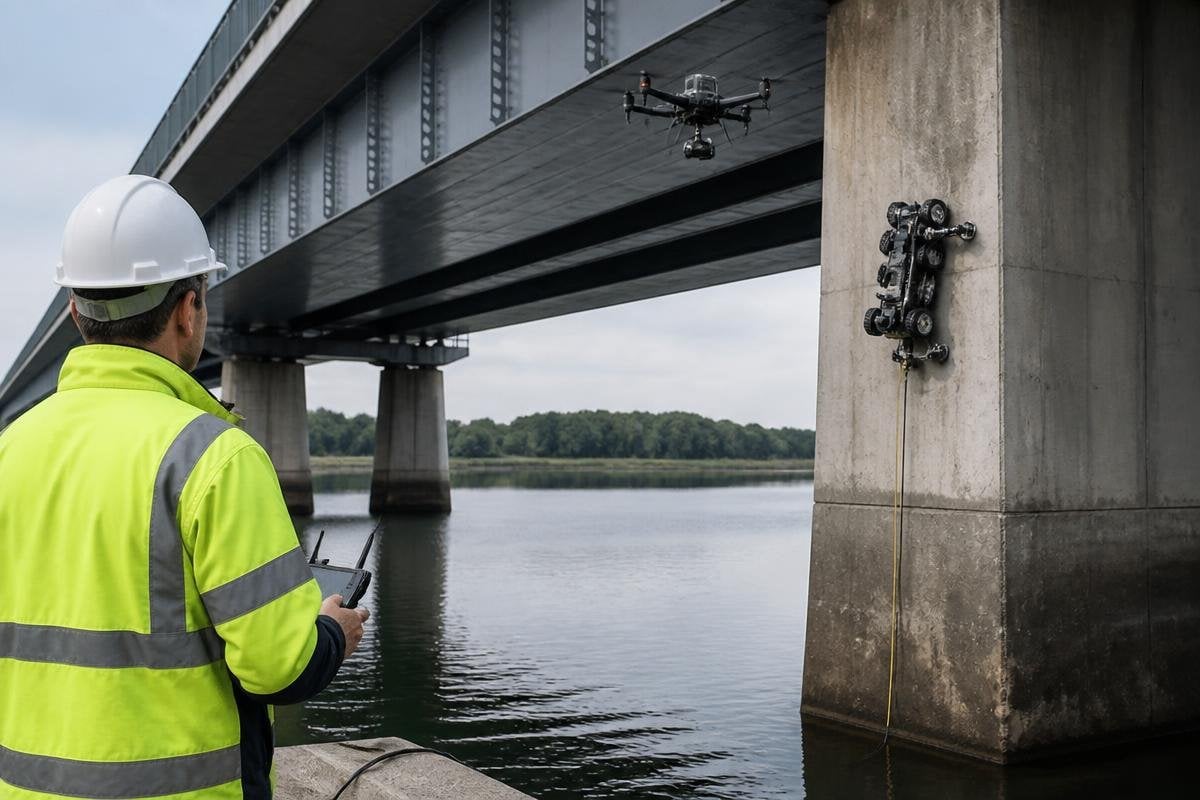
A bridge robot can move along steel, concrete, or cable surfaces while a camera records defects from close range. In a building, a drone or climbing robot can reach walls, roofs, and other areas that are costly or risky for people to access.
- Camera images show cracks, rust, loose parts, and surface damage
- LiDAR maps shape and distance around the structure
- Inspectors still decide what needs repair and how soon
The inspection starts with a map
Before a robot checks damage, it needs to know where it is. A drone may use cameras, inertial sensors, and LiDAR, which measures distance with laser pulses. A ground robot can use wheels, tracks, or legs to move across a marked inspection area.
That map gives each image a place on the structure. An inspector can then compare a crack seen during one visit with a later image from nearly the same position. Repeatable location data matters because a single photo rarely shows whether damage is growing.
The robot also needs a safe route. A drone must keep enough distance from walls, cables, and beams to avoid contact. A climbing robot needs grip on the surface, and its controller must react when the surface changes from clean concrete to rusted steel.
Cameras find the visible damage
Most inspection robots begin with ordinary cameras. They record cracks, spalling concrete, missing bolts, peeling coatings, corrosion, and water stains. Good lighting matters because shadows can look like cracks, while glare can hide them.
Some systems add thermal cameras. These sense heat differences across a surface, which can point to moisture, insulation gaps, or areas with a different material condition. The result still needs a person to check, since temperature patterns can have more than one cause.
Other sensors measure the structure in different ways. Ultrasonic tools can check below a surface, while laser scanners record shape.
A robot carrying these tools may collect more than images, but each sensor has limits set by contact, surface finish, weather, and access.
Dated bridge and building robot reports can tie each machine’s inspection task to the structure, access route, and repair decision that follows.
Buildings create different problems
A building inspection often involves height, narrow spaces, glass, pipes, and changing indoor conditions. A small drone can move through rooms or atriums, while a wheeled robot can inspect floors, plant rooms, and service areas.
The robot has to keep its sensors working as it moves. Dust can reduce image quality. Poor lighting can hide defects. A metal room can also affect wireless links, so the system may need a planned route with regular return points.
Bridges bring their own limits. Wind can move a drone away from a surface, and traffic can shake the structure below a ground robot. Water, salt, dirt, and rust can also affect wheels, sensors, and climbing parts.
These limits shape the inspection plan. A robot may collect data in one area while a person checks another. It may also stop at a marked point and wait for an operator when the route becomes unsafe.
The inspector remains responsible
Robot data helps a person find and compare defects. It doesn’t decide the repair plan by itself. An engineer still needs to judge the defect, check the structure’s design, and decide whether the finding calls for monitoring, testing, or repair.
That division matters when the data is incomplete. A camera may show a surface crack but miss damage behind a coating. A LiDAR scan may show a change in shape without explaining its cause. A clean image also proves only that the sensor saw no visible defect from that position.
The open question is repeatability. For repeatable results, the robot must return to the same area, collect useful data in different weather and light, and keep enough location detail for a fair comparison. Many inspection plans can test that process before wider use.
A practical inspection checklist
Use these points before choosing a robot for a bridge or building:
- Set the defect list: Decide whether the job needs images, surface measurements, thermal data, or checks below the surface.
- Map access first: Record walls, cables, traffic, water, doors, ledges, and areas the robot cannot safely reach.
- Plan human checks: Mark the findings that require close inspection, contact tools, or an engineer’s decision.
- Test data storage: Make sure each image or scan keeps its location, time, sensor type, and inspection route.
- Set weather limits: Write down the wind, rain, dust, temperature, and light conditions that stop the job.
I’d use a robot first for repeatable data in hard-to-reach areas, then keep engineers in charge of every repair decision. The next inspection should show whether the system can return to the same defect and produce a comparison that a person can act on.